
When it comes to selecting the perfect patio umbrella for windy conditions, you need one that combines durability with effective design features. Ensuring your umbrella can withstand strong gusts is essential for both safety and longevity.

Here are key considerations to keep in mind when shopping for a wind-resistant patio umbrella.
Opt for Wind-Resistant Features
To withstand windy conditions, an umbrella must have specific features designed to enhance stability and durability.
1. Vented Canopies
A vented canopy is crucial for managing wind. These canopies have built-in vents that allow air to flow through, reducing wind pressure and preventing the umbrella from lifting or toppling over. This feature not only enhances stability but also extends the umbrella’s lifespan by reducing wear and tear.
2. Sturdy Frame
The frame of the sunshade must be robust. Look for frames made from materials like fiberglass or reinforced aluminum, which offer both strength and flexibility. These materials can bend slightly with the wind, preventing breakage and maintaining the umbrella’s integrity during strong gusts.
3. Weighted Base
A weighted base is non-negotiable for umbrellas in windy areas. The base should be heavy enough to keep the canopy anchored.
Fillable bases, which can be filled with sand or water, offer versatility and can be adjusted to match the wind conditions. Some high-end models come with built-in weights, providing superior stability. How much weight do you need? See this chart.
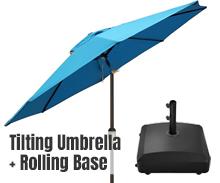
9′ Umbrella, $60
Buy Base Here, $75
total about $135
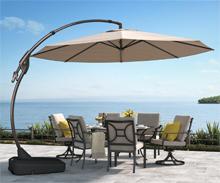
11′ Umbrella
w/ Wheeled Base
about $350-450
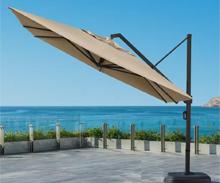
12′ Umbrella
w/ Wheeled Base
about $2100
Avoid Flimsy Designs
When choosing a patio umbrella for a wind-prone climate, steer clear of flimsy designs. Lightweight materials, poorly constructed frames and inadequate bases will not hold up in gusty weather. These sunshades not only fail to provide reliable protection but can also become safety hazards.
Additional Tips for Selecting Wind-Resistant Umbrellas

1. Material Quality
High-quality materials are essential for a wind-resistant umbrella. The canopy should be made from durable, weather-resistant fabric like solution-dyed acrylic or polyester.
These fabrics resist fading, tearing and stretching, ensuring the umbrella maintains its shape and functionality over time.
2. User Friendly Operation
Consider ease of use when selecting your umbrella. Features like a crank lift system for opening and closing and a tilt mechanism to adjust the angle, make handling the umbrella more manageable in varying wind conditions. These functionalities add to the convenience and overall user experience.
3. Canopy Size and Placement
The size of the sunshade and its location play a significant role in its ability to withstand wind. While larger umbrellas provide extensive shade, they are more susceptible to wind forces and thus require secure anchoring.
For optimal performance, place the umbrella in an area that benefits from natural wind barriers, such as adjacent to a wall or within a sheltered part of your patio.
Personal Experience: Testing and Using Wind-Resistant Umbrellas
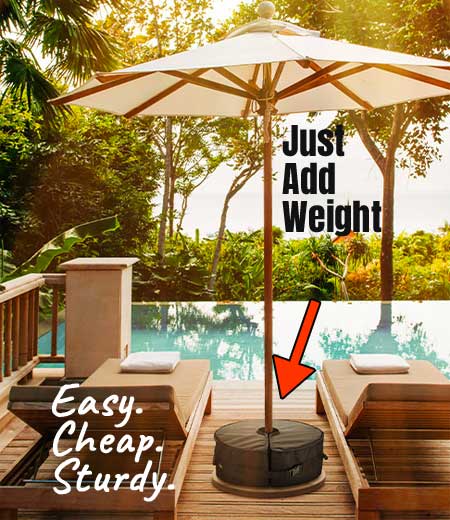
Using sturdy shade canopies on patios in windy areas reveals their true value. A vented canopy effectively diffuses strong gusts, preventing the umbrella from acting like a sail.
The sturdy frame, whether it’s fiberglass or reinforced aluminum, holds up against bending forces, ensuring the umbrella stays upright and intact. A weighted base provides the necessary stability, making it clear how crucial these features are for a reliable patio setup.
The Bottom Line:
Selecting the perfect patio umbrella for a windy backyard is crucial for ensuring a secure and cozy outdoor area. Look for umbrellas equipped with vented canopies, robust frames, and weighted bases to withstand the elements effectively.
Steer clear of fragile designs to ensure long-lasting durability and reliable protection. By emphasizing these key features, you can create a shaded, wind-resistant patio that significantly improves your outdoor enjoyment.


