
If you’ve ever watched your patio umbrella turn into a kite, you already know this: wind changes everything.
I’ve tested and set up a lot of outdoor umbrellas in real backyards (not showroom conditions), and the biggest mistake people make is assuming weight alone solves wind problems. It doesn’t. In fact, the wrong umbrella—even a heavy one—can fail faster in gusty conditions.
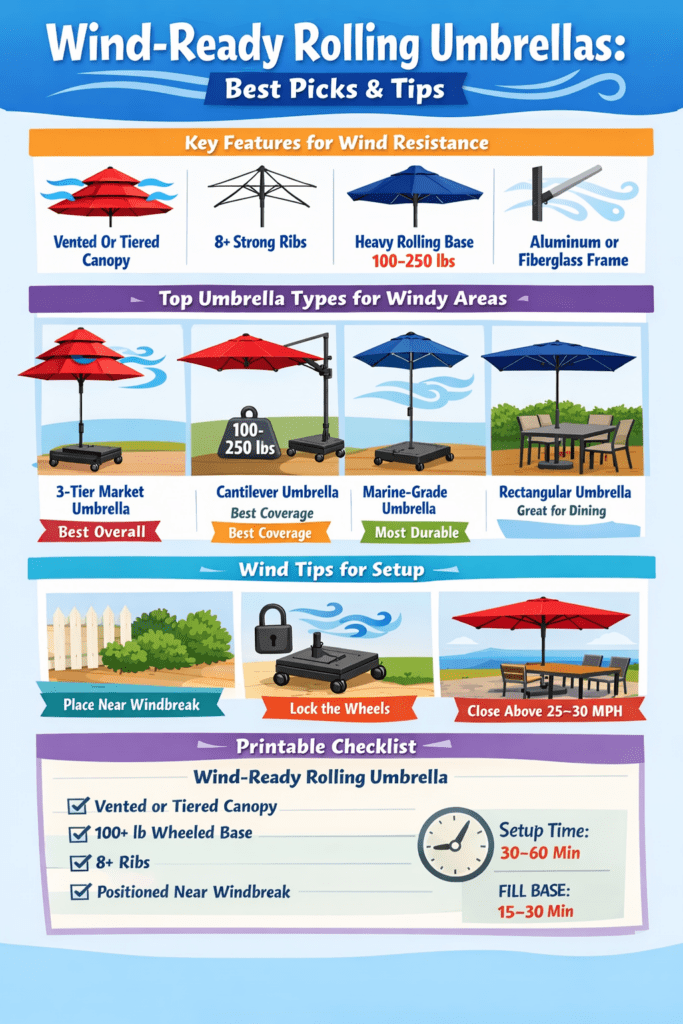
Rolling umbrellas (umbrella + wheeled base) add another layer of complexity: mobility vs stability. You want both—but you can’t maximize both at the same time.
This guide will help you choose the right setup and avoid the frustrating trial-and-error most people go through.
What Actually Makes a Rolling Umbrella Wind-Resistant
Before looking at specific products, you need to understand what matters most.
1. Vented or Tiered Canopy (Non-Negotiable)
Wind needs somewhere to go.
- Vents allow airflow to pass through instead of lifting the umbrella
- Tiered designs (double or triple canopy) are even better
- Without vents, the umbrella acts like a sail
This is one of the most important features—and one of the most overlooked
2. Flexible but Strong Frame
Look for:
- Aluminum (marine-grade preferred)
- Fiberglass ribs (flex instead of snap)
A rigid cheap steel frame bends permanently. A good frame flexes and recovers.
3. Rib Count (8+ is Ideal)
More ribs = better structure.
- 8 ribs = solid baseline
- 10–12 ribs = heavy-duty stability
Frames with more ribs distribute wind pressure better
4. Heavy Rolling Base (Critical)
This is where most setups fail.
- Minimum: 100 lbs total weight
- Better: 150–250 lbs (sand/water filled)
- Wheels should lock firmly
Some wheeled bases use multiple sandbags to increase stability while staying movable
5. Proper Placement (Underrated)
Even the best umbrella fails in the wrong spot.
- Place near windbreaks (fence, wall, shrubs)
- Avoid wide-open wind channels
Wind resistance is as much about environment as equipment
Best Rolling Umbrellas for Windy Areas
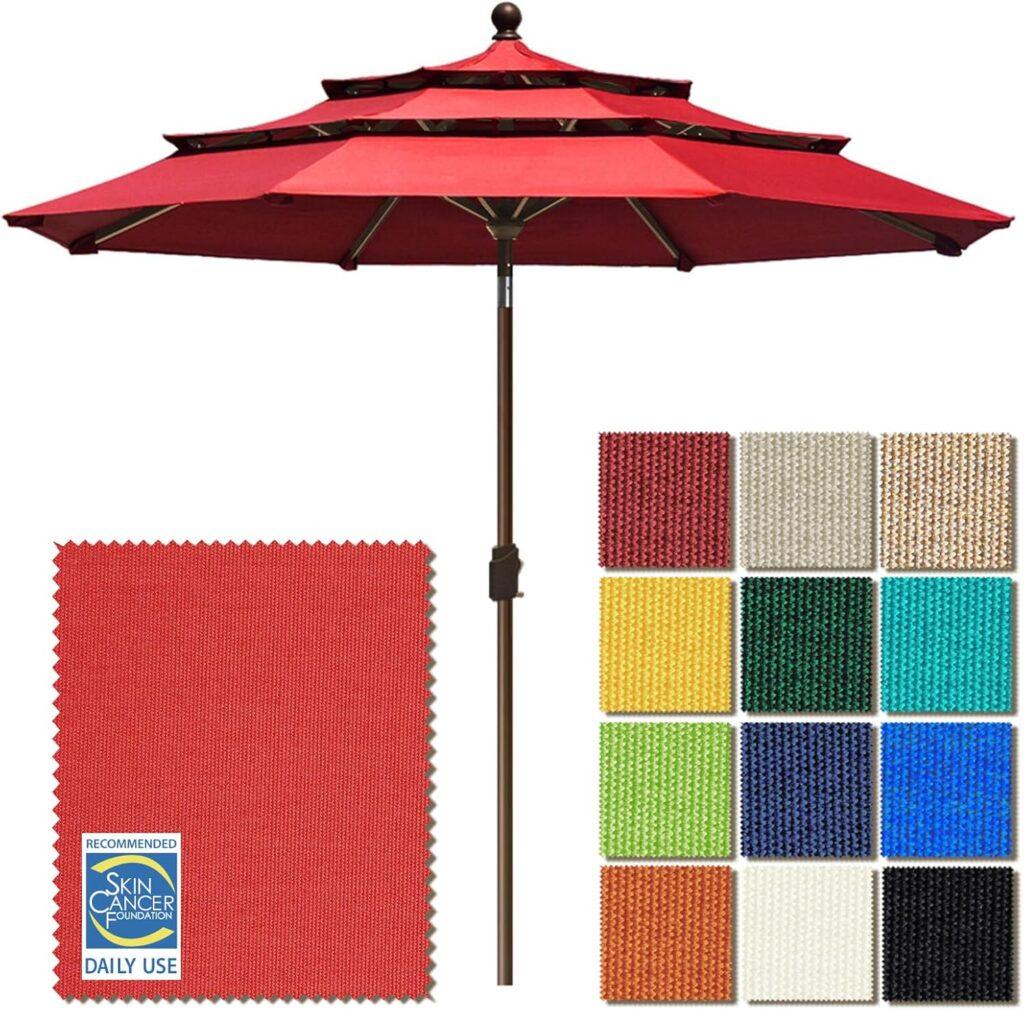
Here are the types that actually perform well.
1. 3-Tier Market Umbrella (Best Overall for Wind)
- Strong airflow control
- Affordable and widely available
- Works well with rolling bases
Example: EliteShade 3-Tier (top-rated in wind tests)
👉 Ideal for: patios, dining tables, moderate wind
2. Cantilever Umbrella with Wheeled Base (Best Coverage)
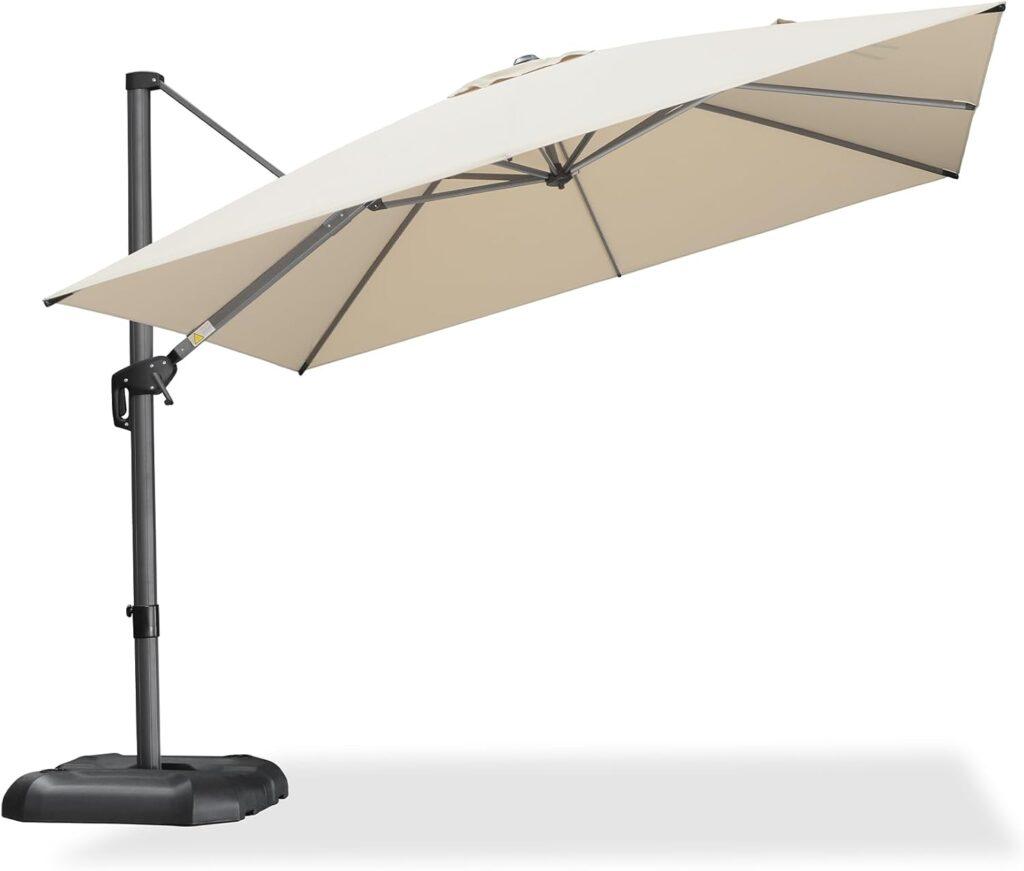
- Side-mounted pole (no center obstruction)
- Large canopy (10–11 ft)
- Requires a very heavy base
Example: Purple Leaf Cantilever (holds up well in storms when closed properly)
👉 Ideal for: lounge areas, poolside setups
3. Marine-Grade Aluminum Umbrella (Best Durability)
- Built for harsh environments (coastal, windy regions)
- Rust-resistant, long lifespan
- Usually paired with premium bases
- Higher cost, considered commercial grade
Example: Outer Marine-Grade Umbrella
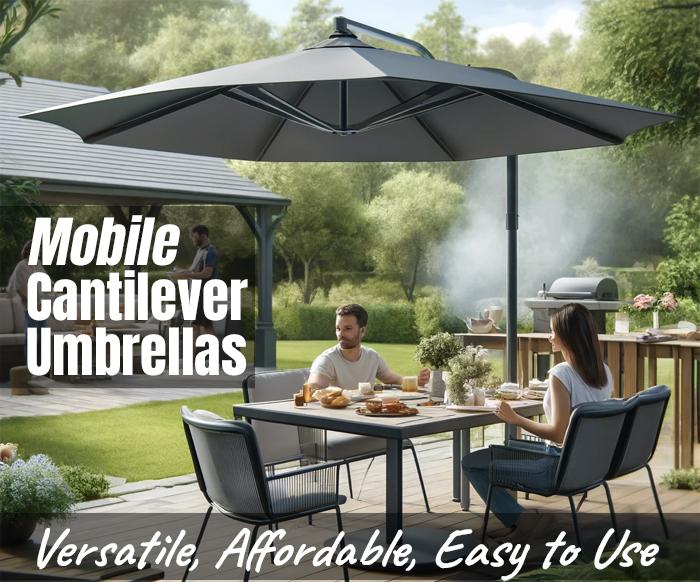
👉 Ideal for: long-term investment setups
4. Rectangular Umbrella with Rolling Base (Best for Dining Tables)
- Better wind profile (less lift vs round)
- Covers long tables efficiently
- See our top picks here
👉 Ideal for: outdoor dining zones
Realistic Expectations (This Matters)
Let’s be blunt:
- No umbrella is “windproof”
- Most should be closed above 25–30 mph winds
- Even high-end models can fail if left open in strong gusts
If you want something that stays up in all wind conditions, you’re actually looking for a shade sail, not an umbrella.
Trade-Offs You Need to Accept
Mobility vs Stability
- More wheels = easier movement
- More weight = better wind resistance
You’ll never fully optimize both.
Size vs Wind Performance
- Larger canopy = more lift
- Smaller canopy = more stability
Cantilever vs Center Pole
- Cantilever = more usable space
- Center pole = more stable

Printable Checklist: Wind-Ready Rolling Umbrella
✔ Must-Have Features
- Vented or tiered canopy
- Aluminum or fiberglass frame
- 8+ ribs
- Locking wheeled base
- Minimum 100 lb base weight
✔ Ideal Setup
- Positioned near windbreak
- Not in open wind corridor
- Easy to close quickly
Time to Complete Setup:
- Assembly: 30–60 minutes
- Base filling (sand/water): 15–30 minutes
Helpful Pages
- Best Umbrella Base Weight Guide
- Round vs Rectangular Umbrella Guide
- Cantilever vs Market Umbrella Comparison
Frequently Asked Questions
Are rolling umbrella bases stable enough for wind?
They can be—but only if they’re heavy and lock properly. Lightweight rolling bases are the #1 cause of failures.
What’s better for wind: round or rectangular?
Rectangular tends to catch less wind, but proper venting matters more than shape.
Should I leave my umbrella open all the time?
No. Close it when not in use or when wind picks up. This alone can double its lifespan.
Is a cantilever umbrella a bad idea in wind?
Not bad—but it requires a heavier base and more careful placement.
What wind speed is too much?
Around 25–30 mph, you should close most patio umbrellas to avoid damage
Conclusion
If you take one thing from this guide, let it be this:
Wind resistance isn’t about buying the heaviest umbrella—it’s about the right combination of airflow, structure, and setup.
The best rolling umbrella for your space will:
- Let wind pass through (vents)
- Stay anchored (heavy base)
- Be easy to reposition (wheels that lock)
Get those three right, and you’ll stop chasing your umbrella across the yard.
Get them wrong, and no price tag will save you.
Resources
Forbes Home Outdoor Living Guides
A broad hub covering outdoor living, patio design, and buying guides for things like umbrellas, furniture, and layouts.
Best Patio Umbrellas for Wind (Forbes)
A more targeted guide with real product comparisons and wind-resistance insights.
Better Homes & Gardens Patio Umbrella Testing Guide
Based on hands-on testing of 40+ umbrellas, evaluating durability, ease of use, and weather performance.


