
If you’ve ever tried to add shade to a small patio, you already know the problem—most umbrellas are designed for bigger spaces. Too wide, too heavy, or just awkward to position. I’ve seen plenty of patios where the umbrella ends up being the thing that makes the space feel smaller, not better.
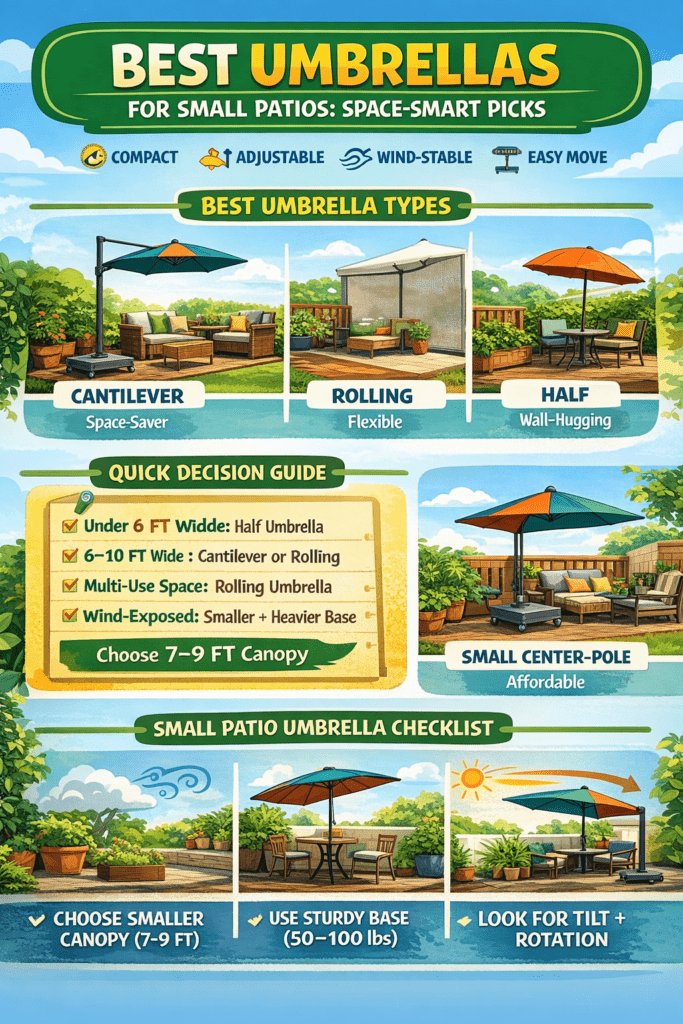
The goal isn’t just shade—it’s efficient shade. You want something that fits your space, adapts throughout the day, and doesn’t turn your patio into an obstacle course.
Let’s walk through what actually works.
What Makes an Umbrella “Good” for Small Patios?
Before jumping into types, get clear on this: small patios require precision, not just coverage.
Here’s what matters most:
- Compact footprint (base size matters as much as canopy)
- Adjustability (tilt, rotation, height)
- Stability in wind (small patios often funnel wind)
- Ease of movement (you’ll reposition it more than you think)
If an umbrella can’t do at least 3 of those well, it’s going to frustrate you.
Best Umbrella Types for Small Patios
1. Cantilever (Offset) Umbrellas
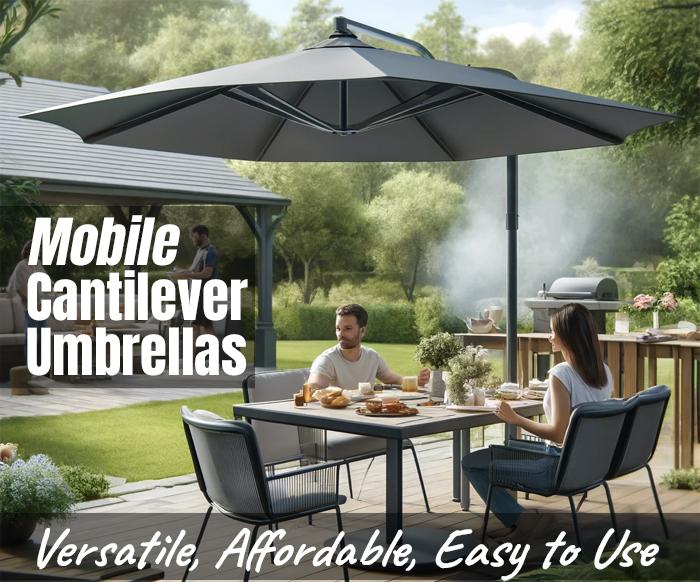
These are usually the best-performing option for small patios—if you size them correctly.
Why they work:
- Base sits off to the side (frees up floor space)
- Can rotate and tilt to follow the sun
- Great for covering seating without a center pole in the way
Trade-offs:
- Base can still be bulky
- Requires proper weighting (non-negotiable)
Best use case:
Small lounge seating areas or patios with tight furniture layouts.
You can see sizing and layout strategies here:
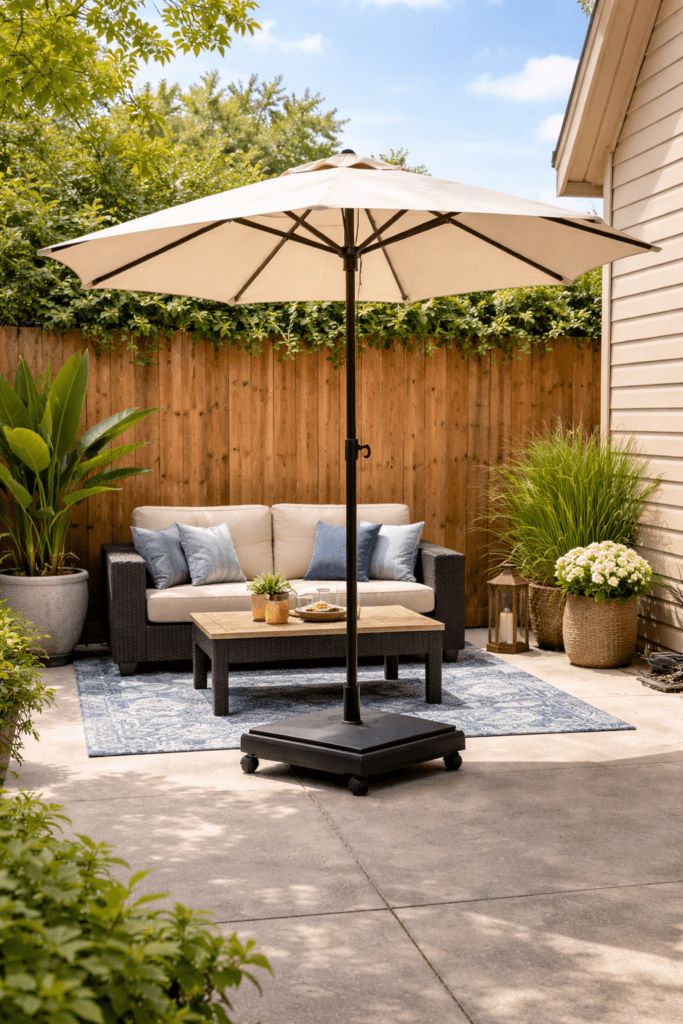
2. Rolling (Mobile) Umbrellas
This is the most underrated option for small patios—and honestly one of the most practical.
Why they work:
- Easy to move as the sun shifts
- No need to “perfectly place” it once
- Great for multi-use patios (dining + lounging)
Trade-offs:
- Slightly less “permanent” feel
- Needs a flat surface to roll easily
Best use case:
Patios where you use the space differently throughout the day.
3. Half (Wall-Mounted) Umbrellas
If your patio backs up to a wall or railing, this is a smart move.
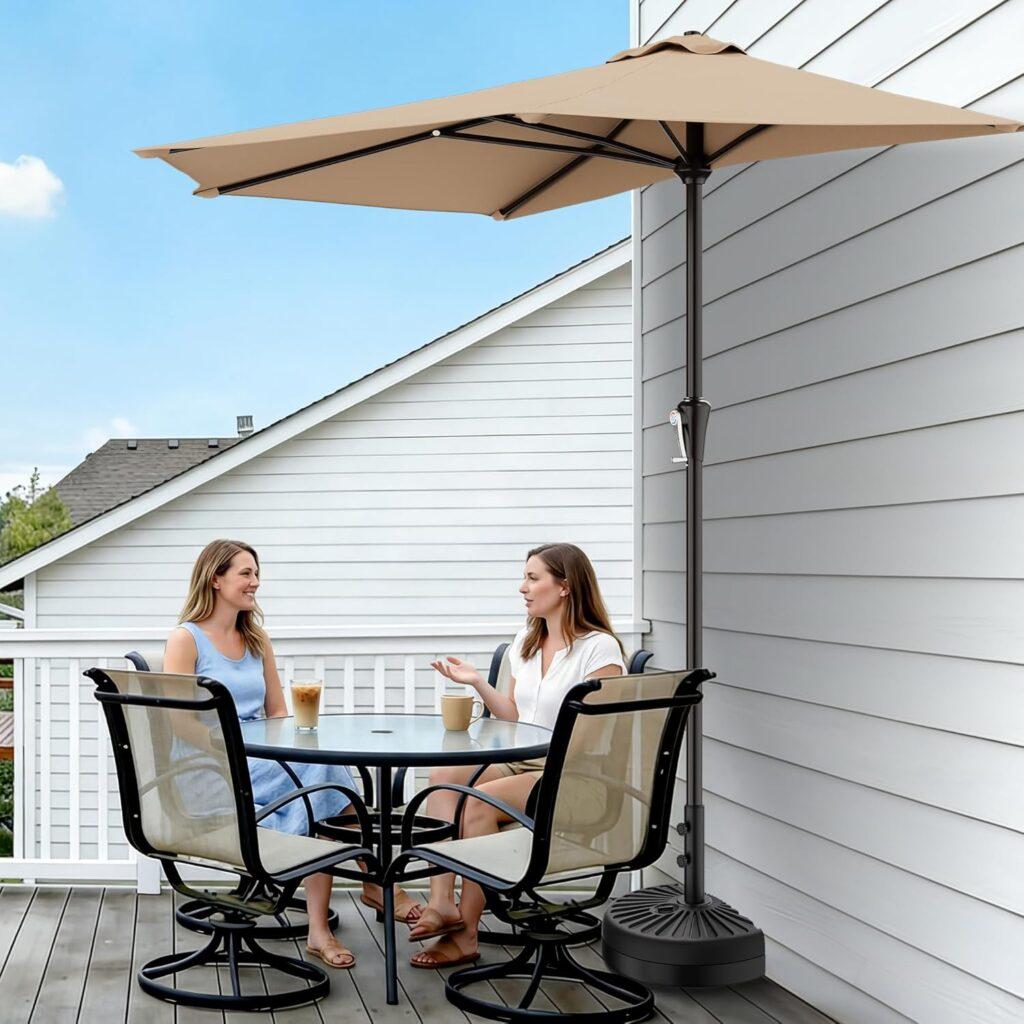
Why they work:
- Designed to sit flush against walls
- Minimal footprint
- Ideal for narrow patios or balconies
Trade-offs:
- Limited coverage area
- Not as adjustable as other options
Best use case:
Tight spaces where every inch counts.
4. Small Center-Pole Umbrellas
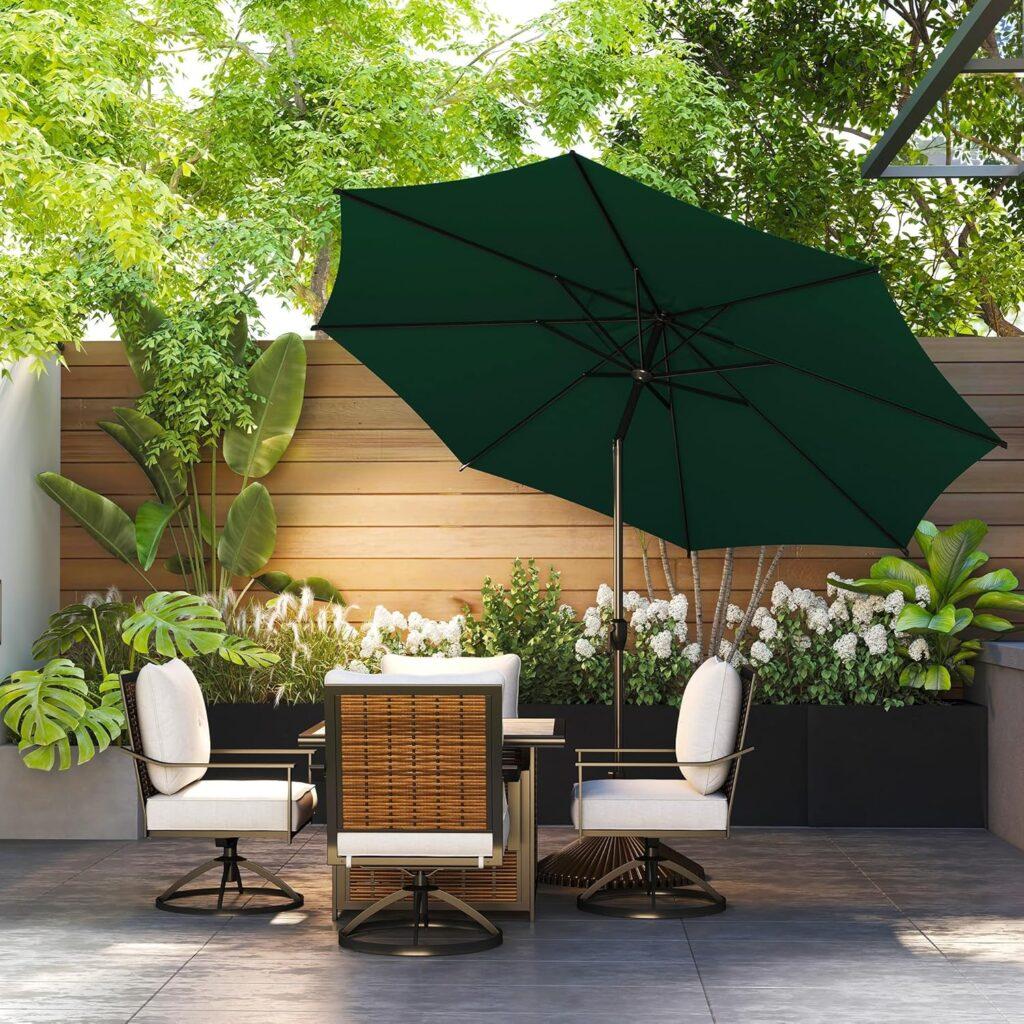
Simple, affordable, and still useful—if you choose the right size.
Why they work:
- Lightweight and easy to manage
- Fits through patio tables
- Budget-friendly
Trade-offs:
- Pole can interfere with seating
- Limited flexibility for sun angles
Best use case:
Small dining tables or simple setups.
How to Choose the Right One (Quick Decision Guide)
If your patio is:
- Under 6 feet wide: Go with a half umbrella or small center-pole
- 6–10 feet wide: Cantilever or rolling umbrella
- Multi-use space: Rolling umbrella (most flexible)
- Wind-exposed: Smaller canopy + heavier base
If you want a deeper breakdown of wind performance:
Trade-Offs and Risks to Watch
Let’s keep this real—small patios come with constraints.
Wind Issues
Smaller spaces can create wind tunnels. Large umbrellas catch more wind than you expect.
Fix:
- Choose smaller canopies (7–9 ft instead of 10+ ft)
- Use heavier bases than you think you need
Overcrowding
Too large of an umbrella makes the space feel cramped.
Fix:
- Match canopy size to seating—not patio size
- Prioritize clearance over maximum shade
Poor Adjustability
Fixed umbrellas = constant frustration as the sun moves.
Fix:
- Look for tilt + rotation features
- Or use a mobile base
Product Setup Recommendations
For most small patios, this setup works extremely well:
- 7–9 ft cantilever or rolling umbrella
- 50–100 lb weighted base
- Tilt + rotation feature
- UV-resistant canopy fabric

Printable Checklist
Small Patio Umbrella Checklist
- Measure patio width and seating area
- Choose canopy size (7–9 ft ideal)
- Confirm base weight (50+ lbs minimum)
- Check for tilt/rotation features
- Verify wind rating or vented canopy
- Ensure easy repositioning
- Test clearance with furniture
Time to Complete
| Task | Time |
|---|---|
| Measure patio | 5 minutes |
| Choose umbrella type | 10–15 minutes |
| Setup and positioning | 10–20 minutes |
| Total time | 25–40 minutes |
Frequently Asked Questions
What size umbrella is best for a small patio?
Most small patios do best with a 7–9 ft canopy. Bigger isn’t better here.
Are cantilever umbrellas too big for small spaces?
Not if sized correctly. A compact cantilever can actually save space by removing the center pole.
Is a rolling umbrella worth it?
Yes—especially if your patio gets sun from different angles. It gives you flexibility that fixed umbrellas don’t.
How much weight do I need for the base?
At least 50 lbs, but 75–100 lbs is safer in windy areas.
Can I leave my umbrella outside year-round?
You can, but it will wear faster. A cover or storing it during storms will extend its life significantly.
Reputable Resources
American Society of Landscape Architects – Outdoor Space Planning Guidance
This page covers core landscape design principles, including how to plan outdoor spaces for comfort, usability, and shade integration.
U.S. Consumer Product Safety Commission – Outdoor Product Safety
CPSC provides safety recommendations for outdoor setups, including stability, anchoring, and safe product use in residential environments.
Final Thoughts
Small patios don’t limit your options—they just force you to be smarter about your setup.
If you focus on fit, flexibility, and stability, you’ll end up with a space that feels bigger, more comfortable, and actually usable throughout the day.
The mistake most people make is going too big or too fixed. Keep it simple, keep it adjustable, and your umbrella will work with your space instead of against it.


