
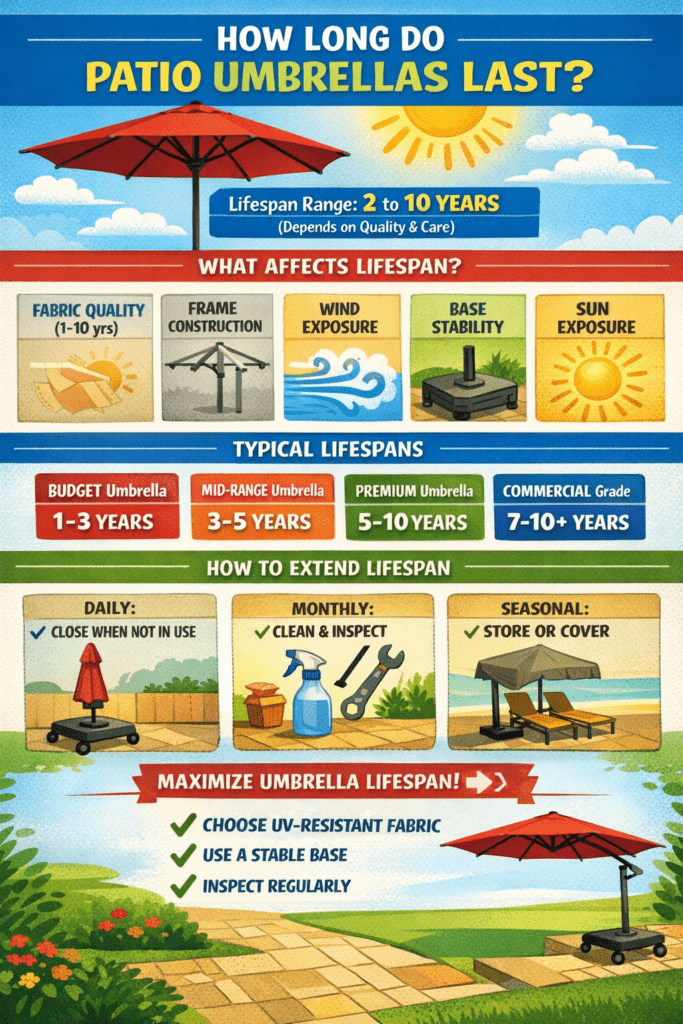
Most patio umbrellas last 2 to 10 years—and that’s a huge range for a reason.
I’ve seen budget umbrellas fall apart in a single summer, and I’ve also seen high-quality setups still going strong after 8+ years. The difference almost never comes down to luck. It’s about how the umbrella is chosen, set up, and used day-to-day.
If you’re trying to get real value out of your investment, it’s less about “how long should it last?” and more about how to control the variables that determine its lifespan. Let’s break it down.
What Actually Determines Lifespan
1. Fabric Quality (Biggest Factor)
The canopy is usually the first thing to fail.
Typical lifespan by material:
- Cheap polyester → 1–3 years
- Solution-dyed polyester → 3–5 years
- Acrylic (Sunbrella-type fabrics) → 5–10 years
What happens over time:
- Fading from UV exposure
- Thinning fabric
- Tearing at stress points
Decision guidance:
If your patio gets full sun (which most do), upgrading fabric is one of the smartest long-term decisions you can make.
2. Frame Construction
The frame determines whether your umbrella survives wind, movement, and daily use.
Common materials:
- Steel → strong but prone to rust
- Aluminum → lightweight, rust-resistant, durable
- Fiberglass ribs → flexible and wind-resistant
Real-world trade-off:
- Heavier frames = more stable, less portable
- Lighter frames = easier to move, but need better base support
👉 If you’re using a rolling base system, aluminum frames are usually the sweet spot for durability + mobility.
3. Wind Exposure
This is where most umbrellas die early. Even light wind causes micro stress on joints and fabric. Over time, that adds up.
Risk factors:
- Leaving umbrella open when not in use
- Poor base stability
- No wind protection (walls, fences, trees)
Realistic expectation:
If your umbrella is exposed to wind regularly and left open, expect the lifespan to drop by 50% or more.
4. Base Stability (Underrated)
A weak base doesn’t just risk tipping—it accelerates wear.
Why it matters:
- Movement loosens joints
- Tilting stresses the pole
- Sudden shifts damage ribs
👉 A heavy-duty rolling umbrella base helps prevent this while giving you flexibility to reposition shade.
5. Sun Exposure (Inevitable, But Manageable)
UV damage is constant—but you can reduce it.
What helps:
- Closing umbrella when not in use
- Using a cover
- Repositioning throughout the day
Trade-off:
More sun exposure = more convenience, but shorter lifespan.
Average Lifespan by Umbrella Type
| Umbrella Type | Expected Lifespan |
|---|---|
| Budget market umbrella | 1–3 years |
| Mid-range patio umbrella | 3–5 years |
| Premium umbrella | 5–10 years |
| Commercial-grade | 7–10+ years |
Important:
These numbers assume proper use and care. Poor setup can cut these in half.
How to Make Your Umbrella Last Longer
This is where you actually save money.
Daily Habits (0–1 minute)
- Close umbrella when not in use
- Avoid leaving it open overnight
Weekly (2–3 minutes)
- Check base stability
- Adjust position for sun/wind
Monthly (10–15 minutes)
- Rinse canopy
- Inspect joints and ribs
Seasonal (20–30 minutes)
- Deep clean
- Store or cover during storms
Time to complete:
- Setup: 30–60 minutes
- Monthly care: 10–15 minutes
Product Setup That Extends Lifespan
If you want your umbrella to last closer to 10 years than 2, your setup matters more than the umbrella itself.
Smart Upgrades:
- Rolling Umbrella Bases
Prevent tipping + allow repositioning - Cantilever Umbrellas with Wheels
Reduce strain from constant repositioning - Protective Covers
Insight most people miss:
A great umbrella on a bad base won’t last. A decent umbrella on a great base often will.
Printable Checklist: Maximize Umbrella Lifespan

Buying Stage:
✔ Choose UV-resistant fabric
✔ Select durable frame material
✔ Match base weight to umbrella size
Setup Stage:
✔ Position for minimal wind exposure
✔ Ensure base is fully stable
✔ Adjust canopy height properly
Maintenance:
✔ Close when not in use
✔ Clean monthly
✔ Inspect for wear regularly
Frequently Asked Questions
How long should a good patio umbrella last?
A well-made umbrella with proper care should last 5–10 years. Without care, even expensive models can fail in 2–3 years.
What part wears out first?
Usually the fabric canopy. Frames often outlast the fabric if properly maintained.
Is it worth replacing the canopy instead of the whole umbrella?
Yes—if the frame is still solid. Replacing the canopy is often the most cost-effective way to extend lifespan.
Do more expensive umbrellas last longer?
Generally, yes—but only if paired with proper setup and use. Price alone doesn’t guarantee longevity.
Can I leave my umbrella open all summer?
You can, but expect a shorter lifespan. Closing it when not in use makes a noticeable difference.
Resources for More Information
🌿 Outdoor Design Planning
- American Society of Landscape Architects – Climate & Design Resources
This resource covers how landscape design integrates sustainability, climate considerations, and efficient outdoor planning.
☀️ Shade & Cooling Strategies
- U.S. Department of Energy – Landscaping for Shade
This guide explains how shade (trees, structures, placement) can significantly reduce heat and cooling costs, with practical planning tips.
🌱 Climate-Smart Landscaping
- University of California ANR – Sustainable Landscaping in California (PDF)
This detailed guide focuses on climate-appropriate plants, water efficiency, and long-term sustainable landscaping practices.
Final Thoughts
If you’re expecting a patio umbrella to last forever, you’ll be disappointed. But if you treat it like what it is—a tool exposed to sun, wind, and weather every day—you can absolutely stretch its lifespan far beyond average.
The biggest shift is this:
Stop thinking of your umbrella as a static object.
The more you adjust it, protect it, and stabilize it, the longer it will serve you.
And if you really want to get the most out of it, focus less on the umbrella itself—and more on the system around it. That’s where the real longevity comes from.


