
Choosing the right size base for your patio umbrella depends on several factors, including the size of the umbrella canopy, the material of the umbrella pole and the typical weather conditions in your area. Here’s how to choose the right size base:

1. Measure the Umbrella Size:
The girth and heaviness of the base should be proportionate to the dimensions of the umbrella canopy. As a general rule, wider umbrellas demand heavier bases to provide adequate stability.
For example, a 9-foot canopy might call for a base that weighs around 90 pounds, while a larger 11-foot umbrella might warrant a base weighing 110 pounds or more.
2. Check the Umbrella Pole Diameter:
Make certain that the base you select matches the diameter of your umbrella pole. While many umbrella bases include inserts or adapters to accommodate various pole sizes, it’s crucial to verify this to guarantee a snug and secure fit.
NOTE: The average diameter of a patio umbrella pole typically falls within the range of 1.5 inches to 2 inches (3.8 cm to 5.1 cm). However, the exact diameter can vary depending on the specific design and manufacturer of the umbrella.
3. Choose the Best Base Weight for Your Canopy:
Patio umbrella bases are available in a range of materials, each offering different levels of steadiness and longevity. These materials commonly include PVC plastic, concrete, steel and cast iron.
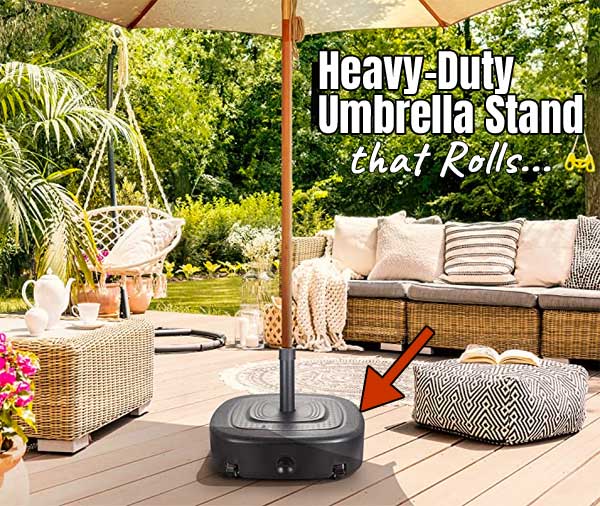
Plastic bases are lightweight and easy to move around, making them convenient for occasional use or for smaller umbrellas. However, they may not adequately support larger or heavier umbrellas. Instead, opt for resin umbrella stands that you can fill with liquid or sand to achieve a weight of 150+ lbs.
Concrete bases are among the heaviest options, offering excellent stability even in strong winds. Their weight helps anchor the umbrella firmly in place, reducing the risk of tipping over. Concrete bases are a popular choice for commercial settings or areas with consistently windy weather.
Steel bases strike a balance between weight and maneuverability. They are heavier than plastic but lighter than concrete or cast iron. Steel bases offer good stability and are suitable for moderate wind conditions, especially when paired with appropriately sized umbrellas.
Cast iron bases are some of the most hardy weights available. They provide exceptional stability, ideal in areas prone to high winds or inclement weather. Iron bases are long-lasting and can withstand years of outdoor use.
And, if you live in a windy area, opt for a heavier base to prevent your umbrella from tipping over. (See chart below.)
4. Assess Wind & Your Outdoor Environment:
Take into account elements like the level of wind exposure and how stable the ground surface is where the umbrella will be situated. For instance, if your patio is subject to high winds or if you intend to place the umbrella on a softer ground like grass, opting for a heavier base to securely anchor the sunshade is advisable.
Determining the exact wind resistance of a patio umbrella can be challenging. For example, it depends on various factors like canopy size, material, design and the weight of the base.
However, here’s a general chart comparing canopy size, base weight and estimated wind speed resistance based on common industry standards and recommendations:
| Canopy Size (ft) | Weight of Base (lbs) | Estimated Wind Speed Resistance (mph) |
|---|---|---|
| 7′ | 70-80 lbs | Up to 15 mph |
| 8′ | 80-90 lbs | Up to 15 mph |
| 9′ | 90-100 lbs | Up to 15 mph |
| 10′ | 100-110 lbs | Up to 15 mph |
| 11′ | 110-120 lbs | Up to 15 mph |
| 12′ | 120-130 lbs | Up to 15 mph |
Keep in mind that these figures are approximate and can fluctuate depending on the particular design, construction, and environmental variables. It’s crucial to proceed with caution and adhere to the manufacturer’s guidelines when utilizing patio umbrellas, particularly in windy conditions.
5. Consider Adding Extra Base Weight:
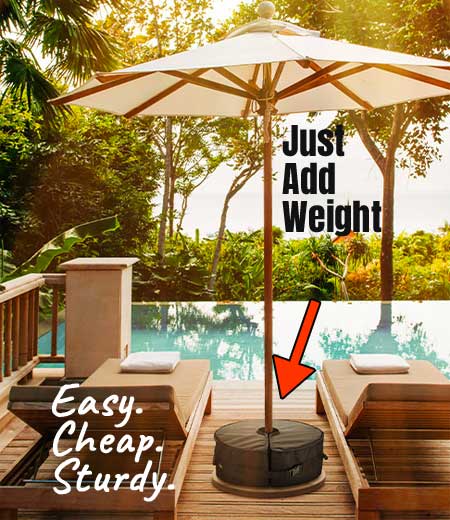
If you live in an area prone to strong winds or inclement weather, you may want to add extra weight to the base by using sandbags or adding water to fillable bases for added stability.
When selecting the perfect size for your umbrella base, take into account the umbrella’s size and weight, along with the typical weather conditions in your area. As a rule, umbrellas that are larger and heavier need more robust bases to stay upright in windy situations.
In areas prone to strong winds or harsh weather, choosing a heavier and larger base, or adding extra weight to the existing base, is recommended. This extra heft ensures the umbrella remains securely anchored, minimizing the chance of it getting blown over or damaged by the weather.
6. Review Manufacturer Recommendations:
Check the manufacturer’s suggested base dimensions and weight for your specific canopy model. They often provide guidelines based on the umbrella’s size and intended use.
Summary:
Considering these factors and suggestions, you can choose the right base size to ensure your patio umbrella remains steady and secure, providing shade and shelter for your outdoor space.
Last Updated April 6, 2024


