
If you’ve ever stood on your patio in the middle of the afternoon sun thinking, “I just need shade—but I’m not drilling into anything,” you’re not alone. Between HOA restrictions, rental limitations, or just not wanting to damage your deck or siding, permanent installs aren’t always an option.
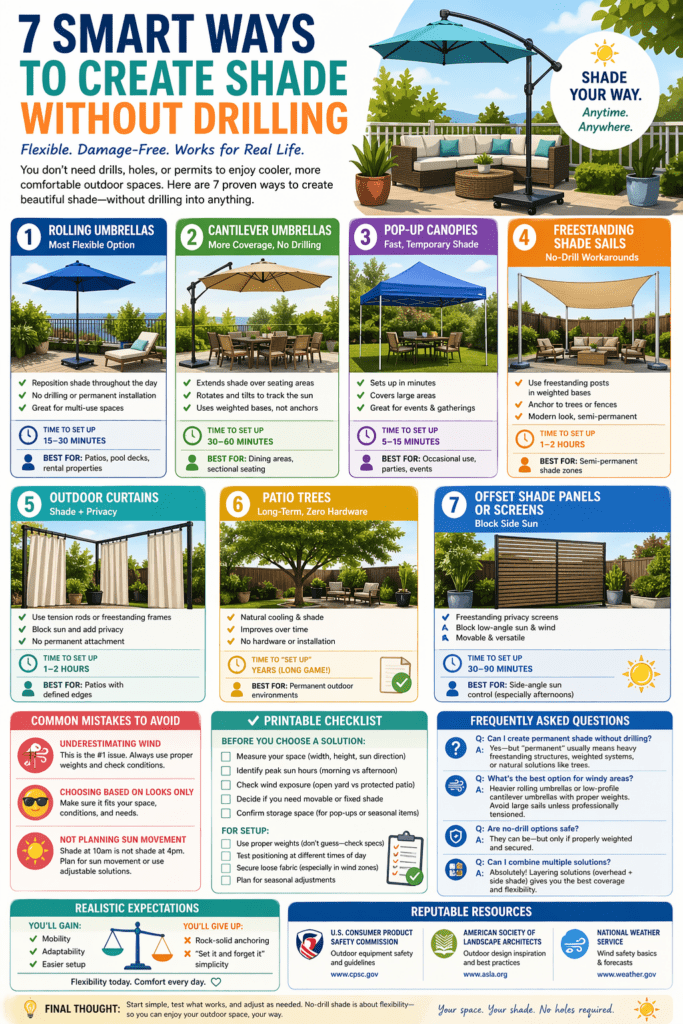
The good news? You’ve got more workable solutions than you think. And in a lot of cases, these no-drill setups are actually more flexible, easier to adjust, and better suited for real-life use than fixed installations.
Let’s walk through what actually works, where people get it wrong, and how to set this up so it holds up in real conditions—not just on a calm, sunny day.
1. Rolling Umbrellas (Most Flexible Option)
If you want maximum control with zero installation, this is the move.
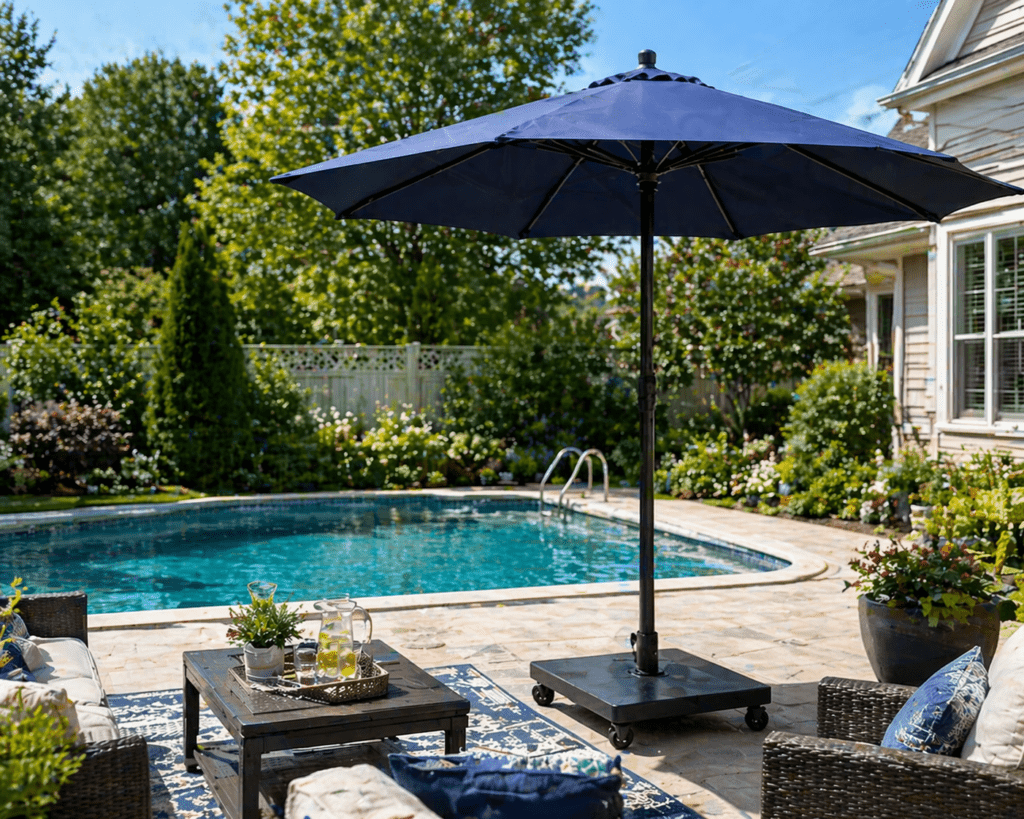
Mobile umbrellas let you:
- Reposition shade throughout the day
- Avoid anchoring into concrete or wood
- Adapt to wind and sun angles
They’re especially useful for multi-use spaces (lounging + dining + grilling). You can shift coverage instead of being stuck with one fixed shade zone.
👉 See examples of flexible setups:
Time to set up: 15–30 minutes
Best for: Patios, pool decks, rental properties
Reality check:
Cheap versions struggle in wind. If you’re in an exposed area (like hillside or lake view properties), prioritize a heavier base and vented canopy.
2. Weighted Cantilever Umbrellas (No Drilling, More Coverage)
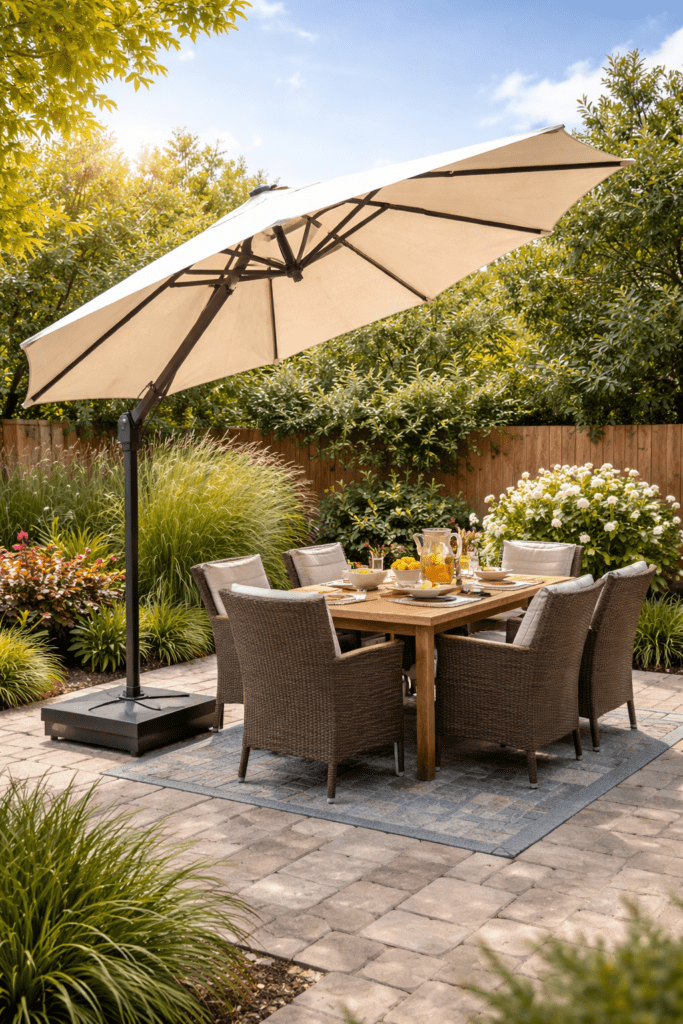
A step up in coverage without committing to installation.
Cantilever umbrellas:
- Extend shade out over seating areas
- Rotate and tilt to track the sun
- Use weighted bases instead of anchors
They’re great for creating a “ceiling-like” shade over a dining table or sofa area.
👉 Setup ideas and comparisons:
Time to set up: 30–60 minutes
Best for: Dining areas, sectional seating
Trade-off:
They take up floor space and need proper weighting (sand/water plates). Undersizing the base is where most people run into trouble.
3. Pop-Up Canopies (Fast, Temporary Shade)
If you want instant shade with zero commitment, pop-ups are hard to beat.
- No drilling, no mounting
- Sets up in minutes
- Covers large areas
They’re perfect for:
- Events
- Backyard gatherings
- Temporary shade during peak sun hours
Time to set up: 5–15 minutes
Best for: Occasional use
Downside:
They’re not subtle. And unless secured properly, they can become wind hazards fast.
4. Freestanding Shade Sails (No-Drill Workarounds)
Traditional shade sails require mounting—but you can work around that.
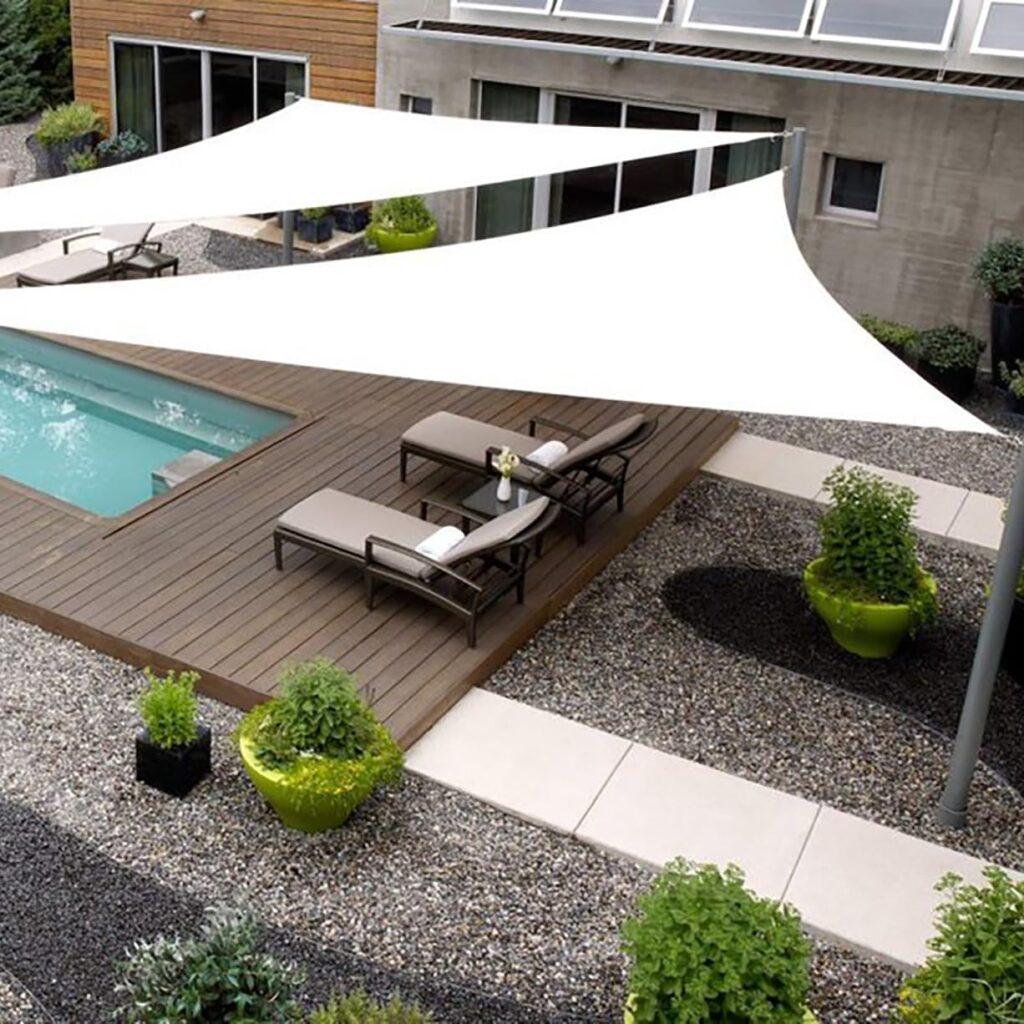
Instead of attaching to walls:
- Use freestanding posts in weighted bases
- Anchor to existing trees or fences
- Use portable poles with ground weights
This gives you the modern look without drilling into structures.
Time to set up: 1–2 hours
Best for: Semi-permanent shade zones
Trade-offs:
- Requires tensioning (not beginner-friendly)
- Wind load can be significant
If you go this route, think “engineering,” not just “setup.”
5. Outdoor Curtains on Tension Rods or Frames
This is one people overlook—and it works surprisingly well.
- Use freestanding frames or pergola kits
- Add outdoor curtains for shade + privacy
- No permanent attachment required
You can block low-angle sun (which umbrellas struggle with).
Time to set up: 1–2 hours
Best for: Patios with defined edges
Reality check:
Wind will move them. That’s not a flaw—it’s just part of how soft shade works.
6. Large Patio Trees (Long-Term, Zero Hardware)
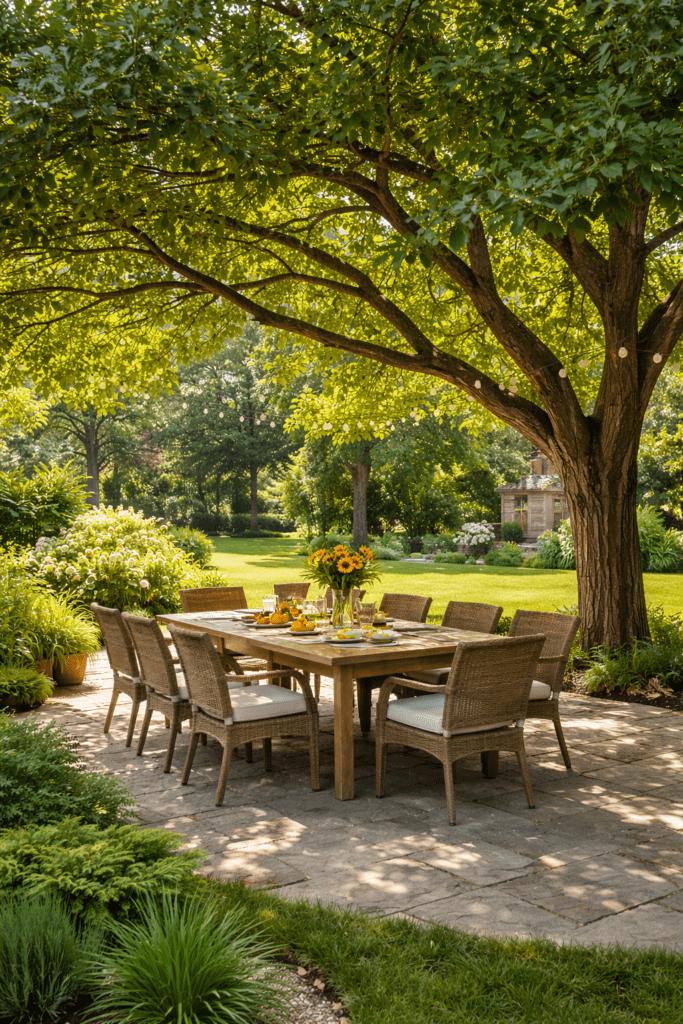
Not fast—but very effective.
If you’re planning ahead:
- Trees provide natural cooling
- Shade improves over time
- No installation or hardware required
Time to “set up”: Years, realistically
Best for: Permanent outdoor environments
Trade-off:
You’re playing the long game. Combine with a temporary solution in the meantime.
7. Offset Shade Panels or Screens
Think vertical shade instead of overhead.
- Freestanding privacy screens
- Movable panels
- Fabric or slatted designs
These block sun from specific angles—especially afternoon west-facing exposure.
Time to set up: 30–90 minutes
Best for: Side-angle sun control
Printable Checklist: No-Drill Shade Setup
Before You Choose a Solution:
✔ Measure your space (width, height, sun direction)
✔ Identify peak sun hours (morning vs afternoon)
✔ Check wind exposure (open yard vs protected patio)
✔ Decide if you need movable or fixed shade
✔ Confirm storage space (for pop-ups or seasonal items)
For Setup:
✔ Use proper weights (don’t guess—check specs)
✔ Test positioning at different times of day
✔ Secure loose fabric (especially in wind zones)
✔ Plan for seasonal adjustments
Common Mistakes to Avoid
1. Underestimating wind
This is the #1 issue. Even light wind can shift or damage poorly secured shade.
2. Choosing based on looks only
That sleek sail or umbrella might look great—but if it doesn’t match your space or conditions, it won’t last.
3. Not planning sun movement
Shade at 10am is not shade at 4pm. You need adjustability or layered solutions.
Frequently Asked Questions
Can I create permanent shade without drilling?
Yes—but “permanent” usually means heavy freestanding structures, weighted systems, or natural solutions like trees. Most no-drill options are semi-permanent.
What’s the best option for windy areas?
Heavier rolling umbrellas or low-profile cantilever umbrellas with proper weights. Avoid large sails unless professionally tensioned.
Are no-drill options safe?
They can be—but only if properly weighted and secured. Skipping this step is where problems happen.
Can I combine multiple solutions?
Absolutely—and you probably should. For example:
- Umbrella for overhead shade
- Curtain or screen for side sun
Realistic Expectations
Here’s the honest truth: no-drill shade is about flexibility, not permanence.
You’ll gain:
- Mobility
- Adaptability
- Easier setup
But you’ll give up:
- Rock-solid anchoring
- “Set it and forget it” simplicity
If you embrace that trade-off, you’ll end up with a setup that actually works day-to-day—not just in perfect conditions.
Resources
- U.S. Consumer Product Safety Commission – Outdoor equipment safety
https://www.cpsc.gov - American Society of Landscape Architects – Outdoor design guidance
https://www.asla.org - National Weather Service – Wind safety basics
https://www.weather.gov
Final Thoughts
If you’re trying to create shade without drilling, don’t overcomplicate it. Start with something movable. Test what works. Then layer in additional shade if needed.
The biggest advantage you have here isn’t just avoiding holes in your deck—it’s the ability to adjust your setup as your space, weather, and routines change. That’s what makes these solutions not just “good enough,” but often the smarter long-term play.


