
If you’ve looked into rolling umbrellas (also called mobile umbrellas), you probably saw the same pitch: easy to move, flexible shade, perfect for any outdoor space.
That’s true—but it’s also where people get tripped up.
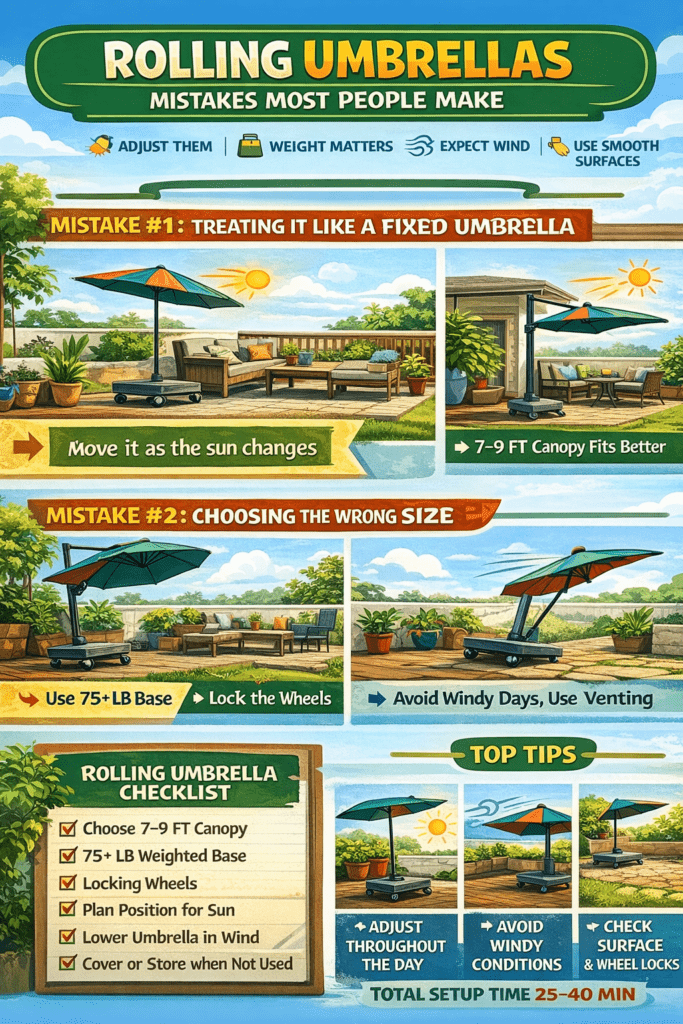
I’ve seen a lot of setups where the umbrella itself is fine, but the way it’s used completely cancels out the benefits. Rolling umbrellas are one of the most practical shade solutions you can own—but only if you understand what they’re actually designed to do (and what they’re not).
Let’s break down the biggest mistakes and how to avoid them.
Mistake #1: Treating It Like a Fixed Umbrella
This is the #1 issue—people set it up once and never move it. That completely defeats the purpose.
What rolling umbrellas are actually for:
- Following the sun throughout the day
- Adjusting shade for different seating areas
- Adapting to changing conditions (heat, glare, wind)
If you want a “set it and forget it” solution, a fixed cantilever might make more sense. If you want flexibility, you have to use it.
Mistake #2: Choosing the Wrong Size
Bigger is not better—especially with mobile umbrellas.

Oversized canopies:
- Catch more wind
- Become harder to move
- Overwhelm smaller patios
What actually works:
- 7–9 ft canopy for most spaces
- Match the umbrella to the seating area—not the entire patio
👉 Use this to dial in sizing:
https://www.umbrellasonwheels.com/umbrella-size-guide

Mistake #3: Underestimating the Base
People love the idea of “rolling”—but forget about stability. A rolling umbrella without enough weight is a tipping hazard.
Reality check:
- Lightweight bases = unsafe in wind
- Wheels need locking mechanisms
- Heavier bases are harder to move—but necessary
Rule of thumb:
- 50 lbs minimum (light use)
- 75–100 lbs for most real-world conditions
👉 Wind and stability breakdown

Mistake #4: Ignoring Wind Behavior
Rolling umbrellas feel portable—but they’re still large sail-like structures.
What people assume:
“I can just roll it out of the way if it gets windy.”
What actually happens:
Wind picks up before you react.
Smart approach:
- Use vented canopies
- Position umbrella lower in wind
- Move it proactively—not reactively
Mistake #5: Not Planning the Surface
This one doesn’t get talked about enough.
Rolling umbrellas only work well on:
- Smooth concrete
- Pavers
- Deck boards in good condition
They struggle on:
- Gravel
- Uneven stone
- Grass
If your surface isn’t smooth, you’ll end up dragging instead of rolling—and that defeats the purpose.
Mistake #6: Expecting One Umbrella to Do Everything
Rolling umbrellas are flexible—but they’re not magic.
They’re best at:
- Targeted shade
- Adjustable coverage
- Small-to-medium spaces
They’re not ideal for:
- Full overhead coverage (like a canopy)
- Large group seating areas
- Extreme weather conditions
👉 For broader shade strategies
Product Setup Recommendations
If you want a rolling umbrella that actually performs well:
- 7–9 ft canopy (vented)
- Heavy wheeled base (75+ lbs)
- Locking wheels
- Tilt or adjustable arm
This combination gives you flexibility without sacrificing stability.

Printable Checklist
Rolling Umbrella Setup Checklist
- Choose correct canopy size (7–9 ft)
- Confirm base weight (75+ lbs preferred)
- Ensure wheels have locks
- Verify surface is smooth/rollable
- Position for current sun angle
- Adjust throughout the day
- Lower or secure in wind
- Store or cover when not in use
Time to Complete
| Task | Time |
|---|---|
| Choose umbrella | 10–15 minutes |
| Assemble base & canopy | 10–20 minutes |
| Initial positioning | 5–10 minutes |
| Daily adjustments | 1–2 minutes each |
| Total setup time | 25–40 minutes |
Frequently Asked Questions
Are rolling umbrellas better than fixed umbrellas?
They’re better for flexibility. Fixed umbrellas are better if you want a permanent, hands-off setup.
How heavy should the base be?
At least 50 lbs, but realistically 75–100 lbs for stability.
Can I use a rolling umbrella in windy areas?
Yes—but you need proper weight, venting, and awareness. It’s not “set and forget.”
Do rolling umbrellas damage decks or patios?
Not if used properly. Look for smooth wheels and avoid dragging on rough surfaces.
Are they worth it for small patios?
Absolutely. In fact, small patios are where they shine the most
Final Thoughts
Rolling umbrellas aren’t complicated—but they are misunderstood. Most problems come down to using them like a fixed umbrella, choosing the wrong size, or underestimating wind and weight.
If you treat them like a dynamic shade tool—something you adjust and reposition—they become one of the most useful upgrades you can make to an outdoor space. Use them the way they’re designed, and they’ll outperform just about anything else in their category.


