
Selecting the appropriate weight for your patio umbrella base is crucial to ensure stability and safety. The right base weight depends on the size of your umbrella canopy and the wind conditions in your area. This guide will provide detailed recommendations to help you make an informed decision.

Below is a detailed chart illustrating the relationship between canopy size, base weight and estimated wind speed resistance, based on widely accepted industry standards and best practices:
| Canopy Size (ft) | Weight of Base (lbs) | Estimated Wind Speed Resistance (mph) |
|---|---|---|
| 7′ | 70-80 lbs | Up to 15 mph |
| 8′ | 80-90 lbs | Up to 15 mph |
| 9′ | 90-100 lbs | Up to 15 mph |
| 10′ | 100-110 lbs | Up to 15 mph |
| 11′ | 110-120 lbs | Up to 15 mph |
| 12′ | 120-150 lbs | Up to 15 mph |
Canopy Size and Base Weight Recommendations
9-Foot Canopy:
- Recommended Base Weight: 90-100 pounds
- Wind Considerations: In areas with light to moderate winds, a base weighing at least 90 pounds is adequate. However, for locations prone to stronger gusts, opt for a stand closer to 100 pounds.
10-Foot Canopy:
- Recommended Base Weight: 100-110 pounds
- Wind Considerations: A 10-foot umbrella requires a more substantial base. For moderate wind conditions, 100 pounds should suffice. For areas with frequent strong winds, aim for a base around 110 pounds to ensure stability.
11-Foot Canopy:
- Recommended Base Weight: 110-120 pounds
- Wind Considerations: Larger canopies need heavier bases to withstand wind. In mild wind environments, 110 pounds may be enough, but in windier areas, a 120-pound stand is recommended.
12-Foot Canopy:
- Recommended Base Weight: 120-150 pounds
- Wind Considerations: For the largest umbrellas, a heavy base is essential. A base weight of 120 pounds can handle mild to moderate winds, but in regions with high winds, go for a base weighing up to 150 pounds.
Recommendations for Weighted Bases

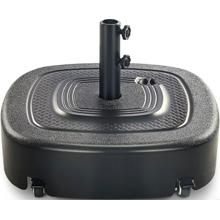
The Impact of Wind
Wind significantly impacts the stability of patio umbrellas. Even a well-secured umbrella can become hazardous in high winds if the base is not heavy enough.
Always consider the typical wind conditions in your area when selecting a base. On particularly windy days, it’s best to close your umbrella to prevent damage and ensure safety.
Factors to Consider for Patio Umbrella Base Weights
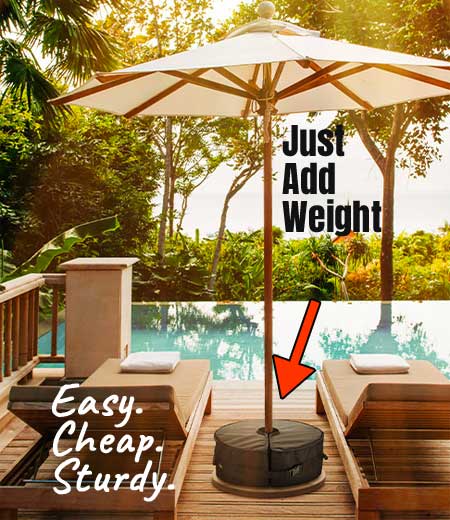
Backyard Location
Understanding your local wind conditions is crucial when selecting a patio umbrella base or sandbag add-on weight. In coastal regions or open spaces, wind gusts can be significantly stronger, necessitating a heavier base to ensure stability.
For example, if you live by the beach where winds can pick up unexpectedly, investing in a base weight of 100 pounds or more for larger umbrellas is advisable. In contrast, if your patio is sheltered by buildings or trees, a lighter base may suffice.
Umbrella Usage
The frequency with which you move your umbrella is another critical factor. For umbrellas that are frequently relocated, such as those used in outdoor dining settings or versatile lounge areas, opt for a base with wheels or one that can be easily emptied and refilled.
A wheeled base allows for effortless mobility, while a fillable base offers the convenience of adjusting the weight as needed. For instance, a fillable base can be emptied of water for easy transport and refilled at the new location, providing flexibility without compromising stability.
Canopy & Base Material
The durability and weather resistance of the base material directly impact its longevity and effectiveness. High-quality plastic and resin bases are excellent for their resistance to cracking and fading, making them ideal for prolonged outdoor use.
Metal bases, particularly those made from powder-coated steel, offer superior strength and rust resistance, ensuring they withstand the elements. For example, a resin base filled with sand can provide substantial weight while being resistant to the harsh effects of sun and rain, making it a reliable choice for year-round use.
Size Compatibility
Ensuring that the base is compatible with your umbrella’s pole diameter is essential for secure fitting. Most bases come with adjustable fittings to accommodate various pole sizes, but it is always wise to double-check specifications.
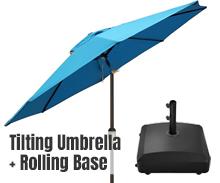
9′ Umbrella, $60
Buy Base Here, $75
123 lb filled weight
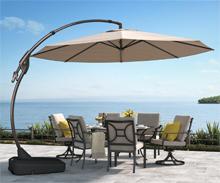
11′ Umbrella
w/ Wheeled Base
374 lb when filled
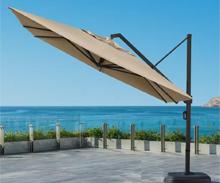
12′ Umbrella
w/ Wheeled Base
200 lb filled
A base that is too loose can result in an unstable umbrella, while one that is too tight may damage the pole. For instance, if your umbrella pole has a diameter of 1.5 inches, verify that the base can securely hold this size without any wiggle room to maintain stability and safety.
By carefully considering these factors—location, usage, material and size compatibility—you can choose a patio umbrella base that not only meets your needs but also enhances the safety and longevity of your outdoor setup. This thoughtful approach ensures that your umbrella remains a sturdy and reliable feature of your patio, providing comfort and shade season after season.
The Bottom Line:
In conclusion, choosing the right weight for your patio umbrella base is crucial for stability and safety. Consider the canopy size, local wind conditions, frequency of moving the umbrella, durability of the base material and size compatibility. Whether you use a fillable base or add-on weights, a secure umbrella ensures a safe and enjoyable outdoor space.


